
Cystoscopy
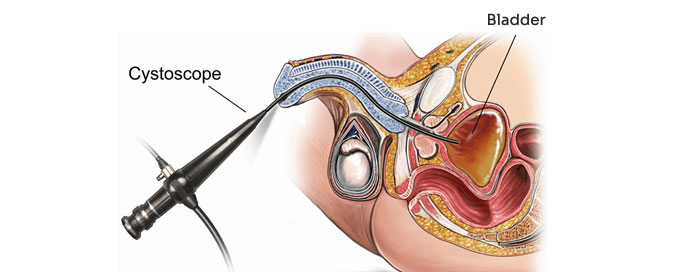
Cystoscopy is a minimally invasive endoscopic procedure that allows a urologist to directly visualize the inside of the urethra and bladder using a thin, lighted instrument called a cystoscope.
It helps in diagnosing, monitoring, and sometimes treating various urinary tract conditions such as recurrent urinary tract infections (UTIs), blood in urine, urinary obstruction, or bladder stones.
The procedure can be performed using a flexible or rigid cystoscope, depending on the purpose — diagnostic or therapeutic. It is usually done under local or short general anesthesia and takes only a few minutes.
Indications
- Recurrent urinary tract infections (UTIs)
- Blood in urine (Hematuria)
- Frequent or painful urination
- Difficulty passing urine or weak urine flow
- Bladder stones or tumors
- Evaluation of prostate enlargement or urethral stricture
- Monitoring after bladder surgery or tumor removal
Procedure Steps
- Anesthesia: Local gel anesthesia or sedation is given for comfort.
- Insertion: The cystoscope is gently inserted through the urethra into the bladder.
- Visualization: The doctor examines the urethra and bladder lining on a video monitor.
- Treatment (if needed): Small instruments may be used to remove stones, take biopsies, or treat small lesions.
- Completion: The cystoscope is removed, and the patient can usually go home the same day.
Advantages of Cystoscopy
- Accurate diagnosis of urinary tract problems
- Quick and safe outpatient procedure
- No incisions or stitches
- Can treat minor conditions (like small stones or growths) during the same session
- Helps plan further treatment effectively
After the Procedure / Recovery
- Mild burning or discomfort while urinating may occur temporarily
- Drink plenty of water to flush the bladder and ease symptoms
- Antibiotics may be prescribed to prevent infection
- Normal activities can usually be resumed within a day