
TURP (Retrograde Intrarenal Surgery)
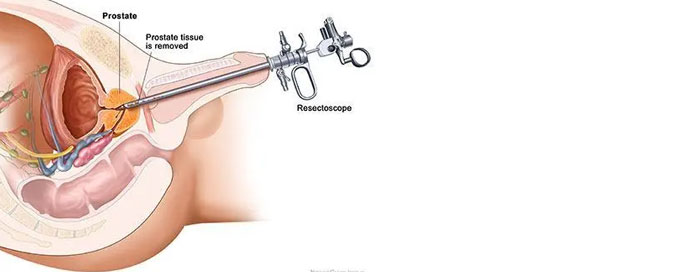
TURP (Transurethral Resection of the Prostate) is a minimally invasive surgical procedure performed to treat Benign Prostatic Hyperplasia (BPH) — a common condition in men where the prostate gland enlarges and blocks the flow of urine.
During TURP, the surgeon inserts a resectoscope (a thin tube with a light and camera) through the urethra — the natural urinary passage — without any external incision. The excess prostate tissue causing the blockage is carefully removed using an electrical loop or laser, allowing urine to flow freely again.
This procedure remains the “gold standard” for surgical management of prostate enlargement.
Indications
- Benign Prostatic Hyperplasia (BPH) causing urinary obstruction
- Difficulty in urination or weak urine stream
- Frequent or urgent urination, especially at night (nocturia)
- Urinary retention (inability to urinate)
- Recurrent urinary infections or bladder stones due to BPH
Procedure Steps
- Anesthesia: Usually performed under spinal or general anesthesia.
- Endoscopic Access: The resectoscope is passed through the urethra to reach the prostate.
- Tissue Removal: The enlarged prostate tissue is shaved off using an electric loop or laser.
- Irrigation: The area is flushed with sterile fluid to clear tissue fragments.
- Catheter Placement: A urinary catheter is inserted temporarily to allow urine drainage and healing.
Advantages of TURP
- No external incision or scar
- Immediate improvement in urine flow
- Quick relief from urinary symptoms
- Short hospital stay (1–2 days)
- Reliable and long-term results
- Minimal risk of complications when performed by an experienced urologist